
On grief, change, and the difference between feeling it and falling back
When someone dies, people know what to do. They bring casseroles. They send cards. They show up in dark clothes and hold your hand and say they’re so sorry.
Nobody brings a casserole when the diagnosis comes back. Or when your youngest loads the last box into his car and backs out of the driveway. Or when the marriage you’ve worked so hard on, quietly settles into a truce rather than a real relationship. Or when the savings account starts shrinking, the business closes its doors, or the career that once defined you stops fitting.
These losses arrive quietly, without some grand announcement. There is often no ritual, no gathering, no one showing up at the door with food. They’re mostly invisible, without anyone saying the word grief out loud.
So most of us, in our desire to be appropriate, don’t say it either.
I Was Very Good at Having It Handled
When I was diagnosed with Ankylosing Spondylitis, I did what I had always done. I researched. I made lists of specialists. I rearranged my calendar around appointments and told everyone, myself included, that I had it handled.
I was very good at having it handled.
Grief waited.
It showed up months later in a grocery store parking lot, when I couldn’t lift my grocery bags into my trunk. I had to ask for help. Afterward, I sat behind the wheel and sobbed over something that used to be easy and mindless.
I was crying for the body I’d had. The one strong enough to carry anything. The one that belonged to a woman who had never once needed to ask for help.
When I closed Fidgets2Widgets in 2019, a technology education center I had poured years into, I told people I was relieved. Part of me was.
The rest of me started three new projects within the month.
I recognize that move now. It’s the old operating system stepping in to spare me a feeling it decided long ago might be too much, or might look too much like a pity party or feeling sorry for myself.
So I smiled and moved on.
Why Grief Feels Like Going Backward
For people who have done real work on their patterns, grief can be scary.
The chest tightens. Sleep gets elusive, evaporating when you close your eyes. The body feels heavy and strangely far away. Fear shows up uninvited, along with that familiar urge to do something.
It feels an awful lot like the old days.
So we assume we’re slipping.
Here it comes again.
And we reach for the very reactions we worked so hard to retire. We overfunction. We control. We go numb. We get busy, get cheerful, get everyone else settled first.
Here’s what I’ve learned, in my own life and sitting across from clients: grief and our old survival reactions can feel remarkably similar in the body. The difference is in where they take us.
Grief moves us toward what has been lost. Survival reactions move us away from what feels too painful to bear and back into the familiar loops that once helped us avoid it.
Grief moves through. Survival loops.
Grief tells the truth about what mattered. Our survival patterns often work overtime to keep us from having to feel just how much it mattered.
Grief brings us into contact with the loss. Our old patterns can become a way of getting away from it.
And sometimes the hardest part is knowing which one we’re doing.
Feel. Grieve. Express. Act.
This isn’t really a four-step process. Grief isn’t that orderly.
We circle back. We feel something we thought we’d already felt. We have a good week and then cry in the grocery store. We take action and discover there is another layer underneath it.
But there are a few things I’ve found useful.
Feel it. Name the thing plainly. I’m sad my son moved out. I’m frightened about the money. I miss who I was before my body changed. I’m grieving what this marriage used to be, even though we’re still together.
Grieve it. Give it time and a place to land. Let it take whatever shape it takes: tears in the car, a long walk with no podcast, a Sunday on the couch you would once have called wasted.
Express it. Say it to someone who can hold it without fixing it. Write it down. Let your body have a response instead of immediately asking it to get over one.
Then act.
And here’s the part that surprises high performers:
The action that follows grief is entirely different from the action that replaces it.
Picture two women whose youngest has just left home.
The first calls a contractor the following Monday to turn his bedroom into an office. She’s moving quickly, but underneath the productivity is something she doesn’t want to get close to. If she keeps moving, maybe she won’t have to feel the emptiness of the room.
The second leaves the door closed for a few weeks. Some afternoons she sits on his bed. She cries in the cereal aisle when she reaches for the brand only he ate. Then one Saturday morning, she calls the contractor.
An entirely different woman walks into it.
The first is still running from the loss. The second has allowed herself to live in contact with it. And when she begins building what comes next, she isn’t asking the new thing to erase what came before it.
The timing isn’t the point.
You can’t always tell from the outside. Sometimes we struggle to even tell ourselves.
What My Dogs Already Know
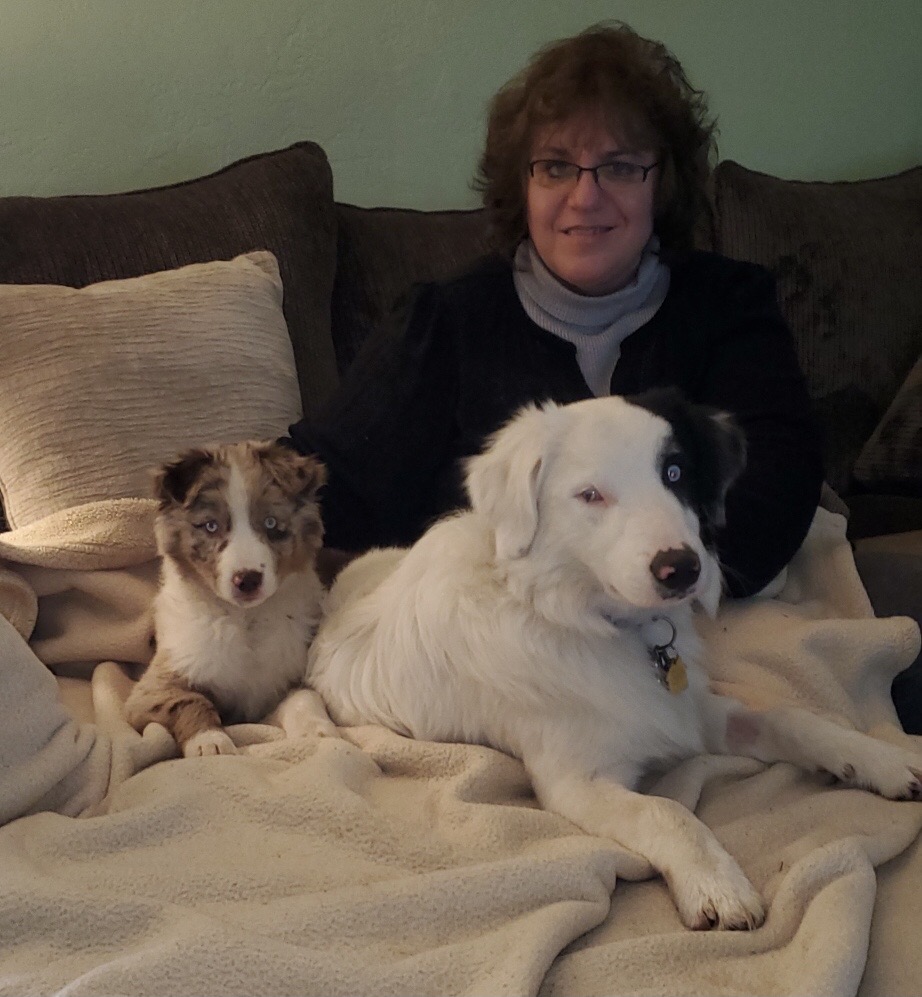
A few weeks ago I wrote about my dogs and the walk that didn’t happen. They groan, they pace, they lie with their noses at the front door. Then they stretch out in a patch of sunlight, fully returned to the present.
Grief asks far more of us than a missed walk, and it takes far longer than five minutes. But the principle has stayed with me.
Feelings we allow ourselves to experience have a chance to change.
The ones we outrun keep chasing us.
If you’ve been doing the work, grief may feel like proof that the work failed.
I’d suggest another possibility.
The old pattern may have kept you too busy to feel any of it. The fact that you’re sitting in the parking lot crying over a case of water may not mean you’ve gone backward at all. It may mean you are finally able to stay with something you once would have immediately outrun.
And eventually, you act.
You make the appointment. Sell the business. Have the conversation. Turn the bedroom into an office.
So the next time life hands you a loss nobody brings a casserole for, what might you let yourself feel if you trusted it would carry you forward?
Leave a Reply